
The Mistake Most People Make First
When a garage door reverses halfway down or refuses to close, the first instinct for most homeowners is to grab a ladder, find the little screw labeled "down force" or "close force" on the opener, and crank it up. It's tempting because it's fast, it doesn't cost anything, and it often works — for a while. The problem is that force and the safety reversal system exist to stop the door the instant it meets resistance, whether that resistance is a stray bike, a pet, or a grandchild. Turning up the force to push through that resistance doesn't fix the underlying issue; it just teaches the opener to shove harder against whatever is actually wrong, which can hide a failing spring, a bent track, or a sensor problem until it fails in a worse and more expensive way.
What the Symptoms Usually Look Like
Two slightly different problems get lumped together here, and it helps to know which one you have:
- Starts closing, then reverses: the door comes down a foot or two, sometimes more, then suddenly reverses back to open on its own.
- Won't close at all: you press the button and the door either doesn't move, moves an inch and stops, or the opener light just blinks a set number of times.
Both point to the same handful of causes. Here's the order a technician actually works through them.
1. Safety Sensors (Photo Eyes)
This is the first thing any technician checks, because it's the most common culprit and the quickest to confirm. The two small sensors near the bottom of the track need a clear, aligned line of sight to each other. Cold-weather grime, road salt spray tracked in from the driveway, spider webs, or even direct winter sun hitting the lens at a low angle can trip them. A knocked bracket from a stray basketball or a parked bike leaning against it will do the same thing.
The fix: wipe both lenses clean, check that both indicator lights are solid (not blinking), and nudge the brackets until the lights stay steady. This takes a few minutes and solves the problem more often than people expect.
2. Obstructions and Track Debris
Leaves, ice chunks, and road grit collect in the track over the fall and into winter, especially right where the door seals at the bottom. If the door is closing against something physical, it will stop or reverse at the same spot every time.
The fix: clear the track and the floor seal area, and check for a buildup of ice if temperatures have been near freezing with melt-and-refreeze cycles, which is common through an Overland Park winter.
3. Travel Limits Drifting
If the door reverses at nearly the same point every time and the sensors and track are clean, the opener's down-limit setting may have drifted. Garage floors shift slightly with seasonal temperature swings, and a limit that was set correctly in summer can be slightly off by late fall.
The fix: a technician recalibrates the limit so the door reads the floor correctly, closing fully without excess force.
4. Worn Rollers, Hinges, and Binding
Cold weather stiffens old lubricant and tightens metal-on-metal tolerances, so a door that ran fine in July can start binding in a track once temperatures drop. Rust from winter moisture and salt can also seize a roller or hinge.
The fix: clean and lubricate the rollers, hinges, and track with a silicone-based lubricant, and replace any roller that's visibly worn, chipped, or no longer spinning freely.
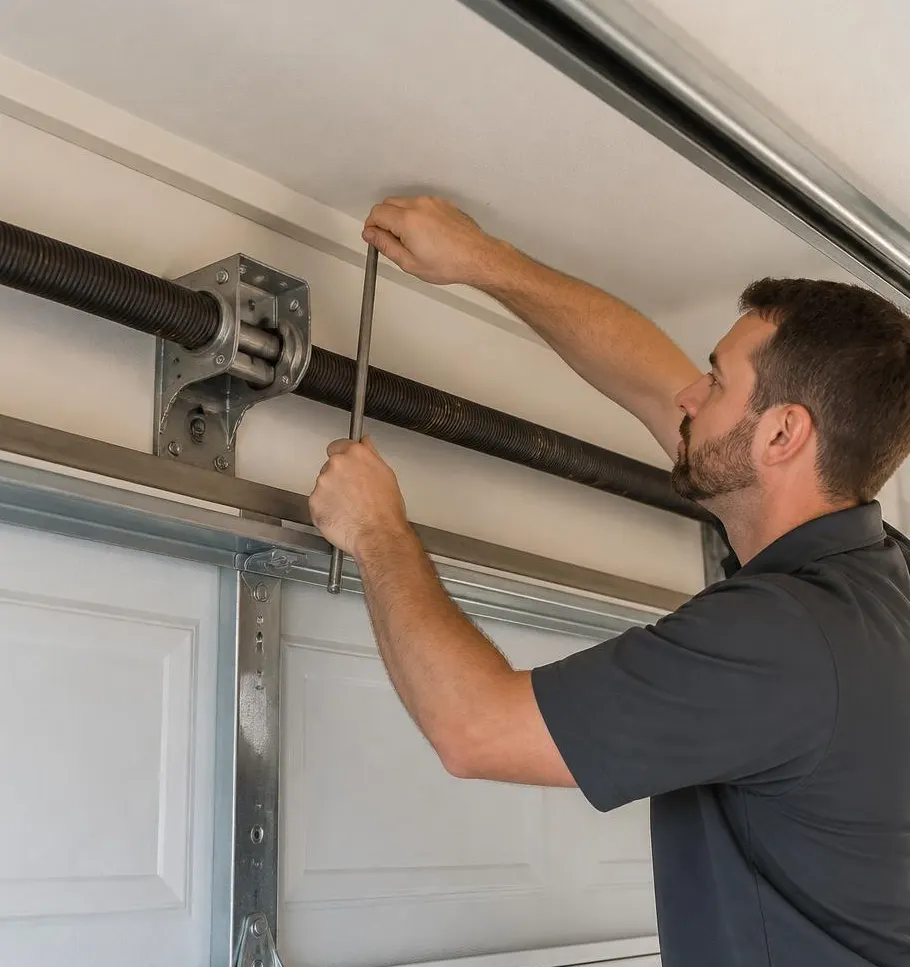
5. Spring Tension
If the door feels heavy when lifted by hand, or the opener strains and groans before reversing, a weakening or unbalanced spring is likely overloading the system. The opener senses the extra resistance and reverses to protect itself and anyone nearby.
The fix: a technician tests spring tension and replaces the spring if it's worn out. This isn't a DIY repair — torsion springs are under serious tension and require the right tools.
6. Opener Logic Board
If everything above checks out, the opener's circuit board itself may be failing, sometimes accelerated by power surges during spring storm season. At this point, repair options are limited and replacement is usually the practical fix.
When to Call Overland Park Garage Door
If you've checked the sensors and cleared the track and the door still won't close, or it's reversing and you can't pin down why, it's time to call. Our technicians diagnose these issues in order, starting with the simple stuff, and handle everything from Garage Door Opener Repair & Installation to Spring Replacement when a worn spring turns out to be the real cause. We also offer Emergency Garage Door Service for a door stuck open overnight in freezing temps, which is its own kind of problem.
If your garage door in Overland Park, Olathe, Lenexa, or anywhere nearby is giving you trouble, call Overland Park Garage Door and we'll get it closing reliably again before winter sets in.