
What Ignoring This for Another Season Actually Costs
If you've been nudging the force setting higher every time the door reverses instead of closing, that's not a fix, it's a loan against your garage door with interest. Left alone through another Overland Park winter, an opener compensating for a bad spring or a bent track will eventually strip its internal gear, burn out the motor, or crack a bottom panel when the door finally slams the last inch instead of easing into it. A gear and sprocket replacement, a new logic board, or a bent panel repair all cost more than the fifteen minutes it takes to find out why the door was fighting the opener in the first place.
What Force and Travel Limits Actually Are
These are two separate settings, and mixing them up is usually where the household disagreement starts.
- Travel limits tell the opener exactly how far to move the door before stopping — where "fully open" and "fully closed" are. Set wrong, the door stops short of the floor, slams into the floor, or reverses before it should.
- Force settings tell the opener how much resistance it's allowed to push against before it assumes something is in the way and reverses. This is the safety feature that's supposed to stop the door if a kid, a pet, or a bike is underneath it.
Neither setting is meant to compensate for a door that's hard to move. They're meant to work with a door that moves the way it should.
The Argument, Settled
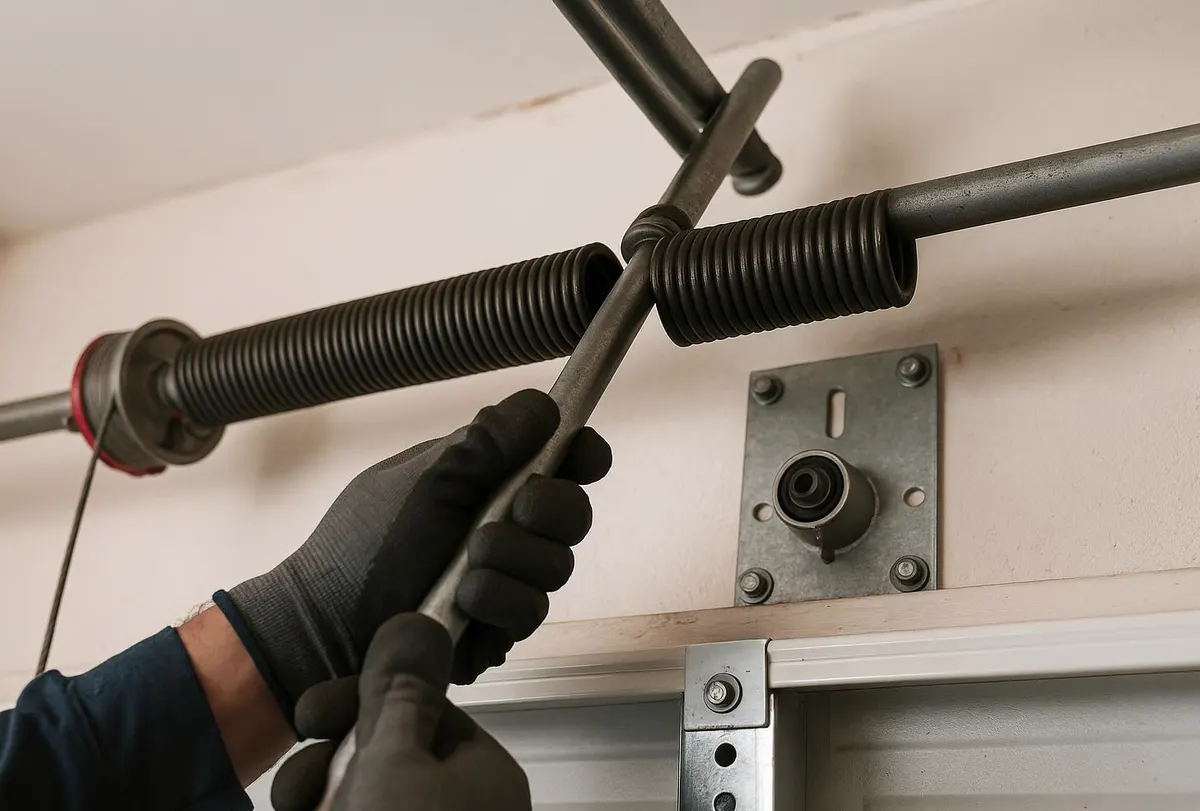
Here's the conversation happening in a lot of garages this time of year: one person says "just turn the force up, it keeps stopping and reversing on cold mornings," and the other says "that feels wrong, something else must be going on." The second person is right. A door that needs more and more force to close isn't a door with a weak opener — it's a door with a mechanical problem the opener is being asked to muscle through. Common culprits include a spring losing tension, rollers or hinges binding, a track that's slightly bent, or weatherstripping that's gotten stiff and stuck to the concrete overnight. Raising the force setting doesn't fix any of those. It just hides them until something breaks.
Why the Wrong Settings Actually Damage the Door
Watch for these signs that force or travel limits have been set to paper over a real issue:
- The door reverses a few inches above the floor every time, even on a clean, dry day.
- The door closes fine most of the way, then jerks or slams the last few inches.
- The opener makes a grinding or straining noise partway through the cycle.
- You put a 2x4 flat on the floor where the door closes, and the door doesn't reverse on contact — it just keeps pushing.
- The top panel has started to bow or crack near the opener arm.
That last one is the expensive one. A door forced shut against resistance repeatedly puts stress on the same panel seam every single time, and steel and composite panels don't flex back into shape once they've bent.
How to Check Force and Travel Settings Yourself
- Test the travel limits first. Run the door through a full open-and-close cycle and watch where it stops. It should land flush on the floor without slamming and reverse to fully open without straining at the top.
- Test the force setting. With the door closing, hold your hands at waist height and let it make light contact. It should stop and reverse with minimal resistance. If it keeps pushing against your hands, the force is set too high for whatever reason the door is already struggling.
- Check balance separately. Pull the release cord to disconnect the opener, then lift the door by hand to waist height and let go. A properly balanced door stays put. If it drops or shoots up, the spring tension is off, and that's the real problem — not the opener settings.
Why This Matters More Heading Into Winter
Cold weather changes how a garage door behaves. Steel components contract slightly, grease on rollers and hinges thickens and offers more resistance, and ice or road salt tracked in on tires can build up on the bottom seal and tracks. All of that adds friction right when homeowners are most tempted to just crank the force up rather than deal with lubrication or a spring that's already starting to fatigue. A door that's properly balanced and lubricated going into a Kansas winter needs very little force to operate — if yours needs a lot, that's the door telling you something before the cold makes it worse.
When to Call Overland Park Garage Door
If the door is reversing unpredictably, slamming, or straining and you've confirmed it's not simply dirty tracks or old weatherstripping, it's time for a real inspection rather than another settings adjustment. Overland Park Garage Door can check spring tension, inspect rollers and tracks for the binding that's forcing the opener to overwork, and reset force and travel limits to the manufacturer's actual specification once the mechanical issue is resolved. If the spring is the culprit — which it often is on older doors — spring replacement up front is far cheaper than an opener motor burned out from months of overcompensating.
If your garage door has been part of a standing argument at your house, let us settle it. Call Overland Park Garage Door for an inspection and get it running the way it's supposed to before winter sets in.